Sailgene Technology

All categories
Sailgene Technology

Introduction
Whole Genome Bisulfite Sequencing (WGBS), uses bisulfite treatment and high-throughput sequencing to distinguish methylated cytosines (C) across the genome, providing detailed methylation profiling at CpG, CHG, and CHH sites.
Applications

Pinpoints methylation sites with high precision at single-base level.

Offers a comprehensive view of genome-wide C methylation, recognized as the gold standard for methylation sequencing.

Effectively assesses treatment impacts on global methylation and identifies differentially methylated regions.
Highlights

It can cover the entire genome and accurately locate the methylation status of each CpG site.

It detects the methylation level of all CpG islands and non-CpG regions in the genome without any regional limitations.

It can accurately detect low-methylation regions, making it suitable for samples with low methylation levels.
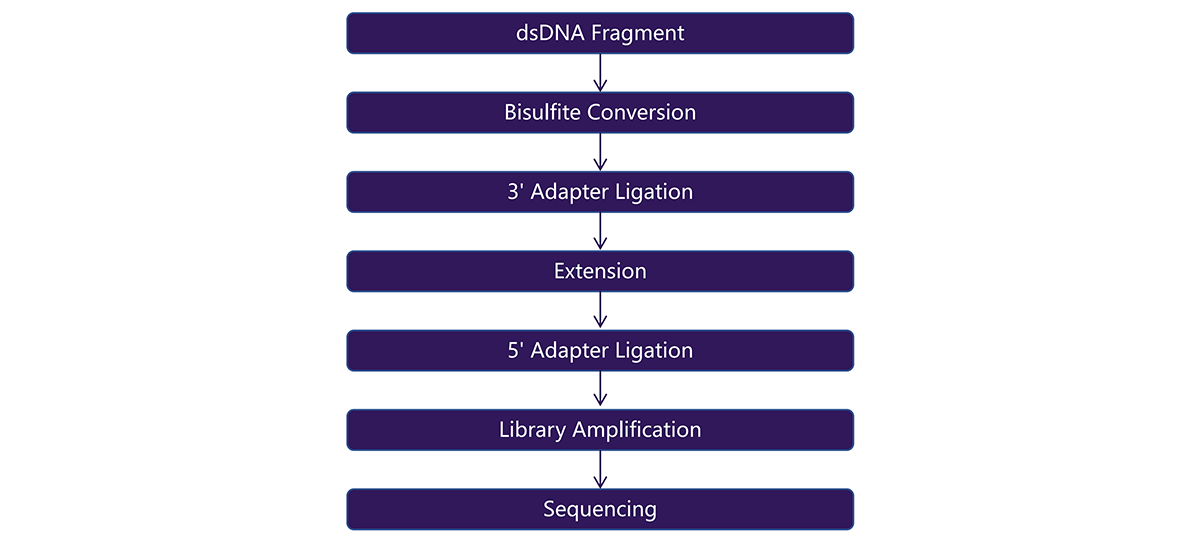
Library Construction Workflow
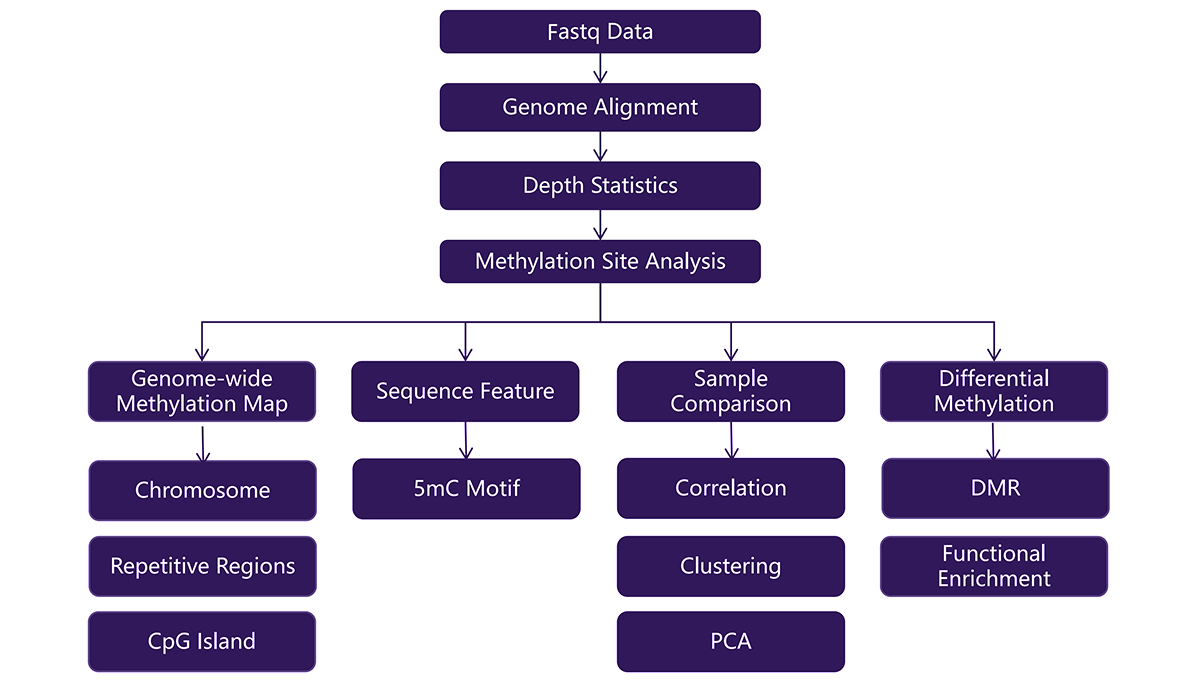
Analysis Workflow
Data Delivery File Formats
Fastq Data Files
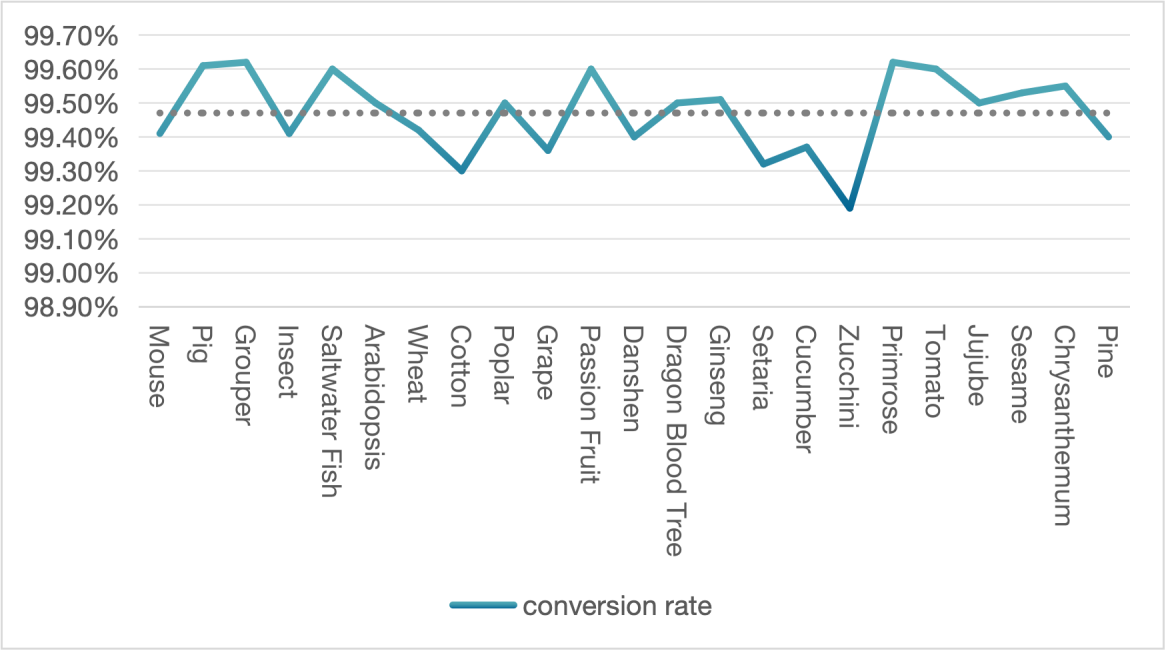
Sequencing Yield Display
Sample Requirements
|
Sample Type Platform |
Plant tissue sample |
Animal tissue sample |
Number of cells cultured |
Blood |
Bacterial sample |
fungi |
|
WGBS(Illumina/DNBSEQ) |
≥500 mg |
≥500 mg |
≥1*106 |
≥1 mL |
≥500 mg |
≥2000 mg |
Publications
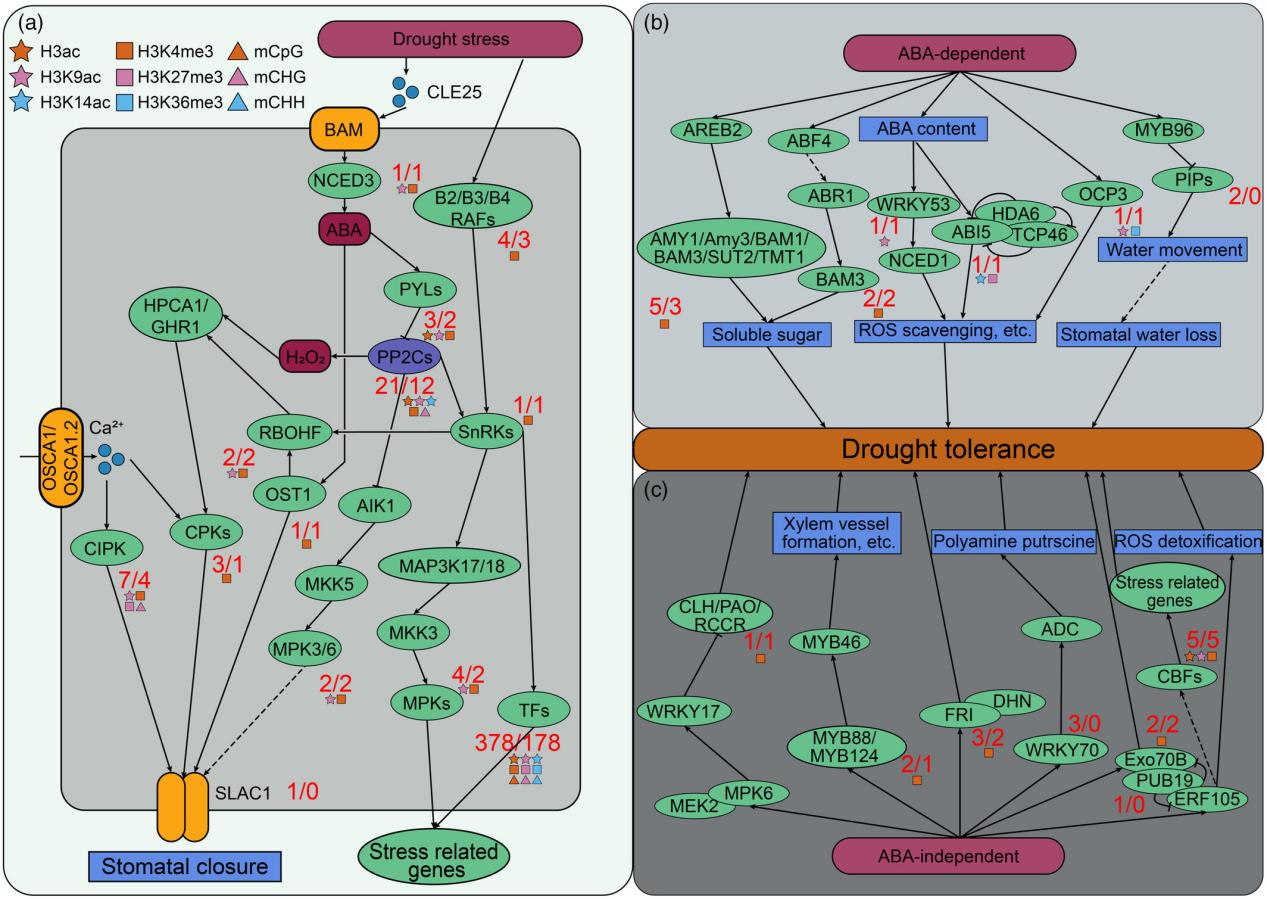
An integrative multi-omics analysis of histone modifications and DNA methylation reveals the epigenomic landscape in apple under drought stress(Plant Biotechnology Journal, IF=10.5)
Article link:
https://onlinelibrary.wiley.com/doi/abs/10.1111/pbi.70173
Summary: Epigenetic regulation plays a key role in plant development and stress response processes. Although previous studies have found that epigenetic modifications are involved in the drought response in apple, a comprehensive epigenomic profile of the response of apple to drought is needed. To characterize epigenomic profiles during the response of apple to drought, we conducted transcriptome, whole-genome bisulfite sequencing, and ChIP-seq analyses of six histone modifications (H3ac, H3K9ac, H3K14ac, H3K4me3, H3K27me3, and H3K36me3) in Malus hupehensis at 0, 3, 6, and 9 days after drought treatment. The greatest changes in differentially expressed genes were observed after 6 days of drought treatment. However, the highest levels of DNA methylation near the gene region were observed after only 3 days of drought treatment. The global enrichment of six histone modifications slightly decreased under drought treatment. Up-regulated drought-responsive genes with higher fold changes were associated with the hypo-regulation of H3K27me3, and up-regulated genes with lower fold changes were associated with the hyper-regulation of H3K4me3. Many drought-responsive genes such as MYB88, NCED3, and JAZ1 are regulated by epigenetic modifications. We verified the functions of two candidate drought-responsive genes regulated by multiple epigenetic modifications, MdABI5 (regulated by H3K14ac and H3K27me3) and MdOCP3 (regulated by H3K9ac and H3K36me3) in the drought response. The phenotypes of transgenic apple under drought showed that MdABI5 and MdOCP3 positively regulate drought tolerance in apple. Our results provide new insights t for studies of the molecular mechanism of epigenetic modifications and have implications for improving the drought resistance of apple.
What's the best choice?
|
Feature |
WGBS |
Nanopore DNA Methylation |
|
Sequencing Platform |
Illumina |
Nanopore |
|
Read Length |
PE150 |
No length limitation, enabling ultra-long reads for comprehensive analysis of complex genomic regions |
|
Bisulfite Treatment Required |
Yes |
No |
|
Detectable Methylation Types |
5mC |
5mC, 5hmC (5-hydroxymethylcytosine), 6mA (6-methyladenine),4mC (4-methylcytosine); allows for direct detection without chemical modification |
|
Data Formats Delivered |
Fastq |
POD5, Fastq |
|
Key Advantages |
High accuracy with short reads |
No length limitation、Direct detection、Versatile applications、Enhanced resolution |
Keyword:
Whole Genome Bisulfite Sequencing
Contact Us
If you are interested in our long-read sequencing services or potential collaboration, please contact us. Our team is ready to support your research with tailored solutions. We also welcome feedback from users to help us improve our services.

Contact Us
Add: 82 Wendell Avenue, Pittsfield, Massachusetts, USA
在线客服添加返回顶部
右侧在线客服样式 1,2,3 1
图片alt标题设置: SAILGENE TECHNOLOGY INC.
表单验证提示文本: Content cannot be empty!
循环体没有内容时: Sorry,no matching items were found.
CSS / JS 文件放置地