Sailgene Technology

Genome

The pan-genome encompasses all genes within a population, consisting of core genes (presentin all samples), dispensable genes (found in some samples), and unique genes (exclusive tospecific samples). Core genes indicate species stability and are typically linked to species’ biological functions and key traits; dispensable and unique genes reflect species-specific biological attributes and adaptability to particular environments. The pan-genome provides acomprehensive genetic overview of a species and enables comparisons between individual genomes. lt identifies genomic variations like SNPs, InDels, SVs, and PAVs, offering valuable insights into the mechanisms underlying species traits.
Telomere-to-Telomere (T2T) Genome
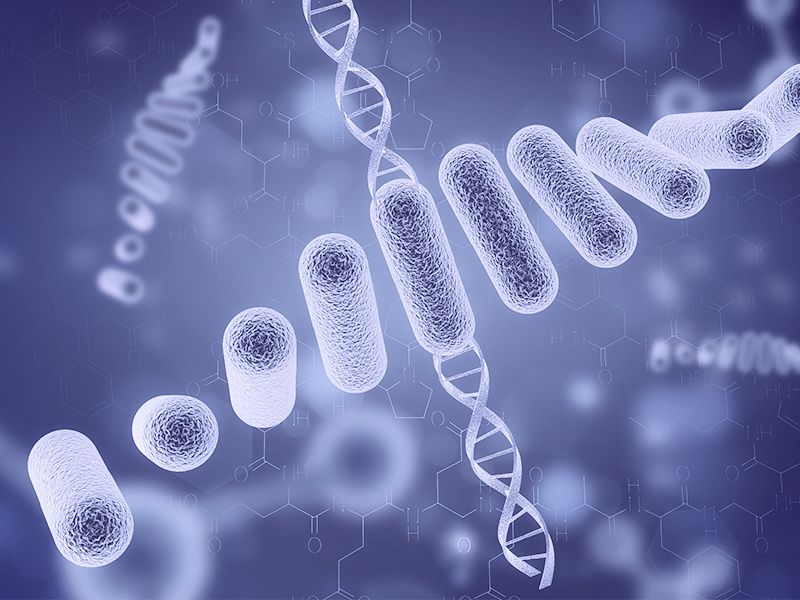
The Telomere-to-Telomere (T2T) genome represents a complete and gapless assembly of anorganism's genome, spanning from one telomere to the other. Unlike conventional assembliesthe T2T genome leverages advanced long-read sequencing technologies-PacBio HiFi and Nanopore ultra-long reads-in combination with Hi-C scaffolding to produce highly contiguousaccurate, and comprehensive genomic assemblies. As a gold standard in genome assemblythe T2T genome provides a powerful foundation for investigating genome architecture,evolutionary biology, functional genomics, and unlocking new frontiers in genomic research.
Nanopore Ultra-long Sequencing (PromethION platform)
Nanopore platforms enable single-molecule sequencing by directly detecting changes in electrical current as DNA strands pass through nanopores. This technology supports read lengths of hundreds of kilobases (kb). When combined with Sailgene’s proprietary ultra-long DNA extraction kit, read lengths with an N50 exceeding 150 kb can be achieved.

Transcriptome

Direct RNA Sequencing: Without reverse transcription or amplification, it enables direct reading of full-length poly(A)-tailed RNA molecules (rather than cDNA). This technology can detect RNA modification sites (e.g., m6A, m5C, pseudouridine ψ, inosine, and 2'-O-Me) on individual RNA molecules, enabling precise analysis of alternative splicing, fusion genes, and the identification of novel isoforms. Additionally, it provides relatively accurate estimation of poly(A) tail length, thereby preserving the native RNA characteristics.
Full-length Transcriptome Sequencing
Full-Length Transcriptome Sequencing, which bypasses fragmentation, directly generates high-quality full-length sequences spanning 5' to 3' of reverse transcribed cDNA using the ONT sequencing platform. This approach not only enables precise analysis of alternative splicing events and fusion genes but also facilitates the identification and quantification of novel isoforms, thus ensuring accurate measurements of transcript expression levels.
Full-length IncRNA sequencing refers to the direct acquisition of the entire sequence from the 5' end to the 3' end of reverse-transcribed cDNA without fragmenting RNA following rRNA depletion. It does not rely on Poly(A) tail enrichment, thereby enabling the identification and quantification of both Poly(A)-tailed and non-tailed IncRNA transcripts. Furthermore, it systematically performs comprehensive analysis of alternative splicing events in IncRNA molecules.
Spatiotemporal
Long-read Spatial Transcriptomics
Spatial transcriptomics involves the use of Nanopore long-read sequencing technology to directly obtain data from Stereo-seq or 10X Visium HD 3', which provides spatially resolved information about full-length cDNA. By analyzing each spot, one can determine the results of isoform quantification and variable splicing events. It not only enables the identification of all RNA molecules but also retains the original positioning information within the tissue section. This is crucial for understanding the spatial distribution of gene expression, as the relationships within and between cells are significant.
Spatial transcriptome sequencing enables comprehensive mapping of gene expression within the intact tissue architecture.We provide integrated Visium HD and Stereo-seq spatial transcriptomics services. Our dual-platform solution delivers comprehensive spatial insights, combining the high-definition, subcellular resolution of Visium HD with the expansive field of view and ultra-high sensitivity of Stereo-seq. This powerful approach enables detailed mapping of tissue architecture and gene expression for breakthrough discoveries in biology and disease research.
Long-read Single-Cell Transcriptome Sequencing
Long-read single-cell transcriptome sequencing refers to the use of Nanopore sequencing technology to directly read the full-length cDNA reverse transcribed from single cells processed by 10x Genomics. This process enables the identification and quantification of isoforms within individual cells, as well as the detection of alternative splicing events at the single-cell level. By combining the advantages of single-cell analysis with third-generation long-read sequencing techniques, long-read single-cell transcriptome sequencing elevates single-cell transcriptomic analysis from the gene level to the isoform level.
Single-Cell Transcriptome Sequencing
10X Genomics single-cell RNA sequencing is a high-throughput cell capture technology based on microfluidics, droplet encapsulation, and barcode labeling. It enables the simultaneous isolation and labeling of 500–10,000 single cells, capturing the 3' or 5' transcriptome information of each cell. This approach allows for the study of gene expression profiles at high throughput and single-cell resolution, revealing the heterogeneity of complex cell populations and avoiding the masking of individual cell gene expression signals by population averaging.
Epigenome
Conformation capture (3C) with Nanopore long-read sequencing, enabling the detection of multi-locus interactions andassociated DNA methylation pattems within genomes. Its streamlined workflow eliminates theneed for biotin labeling or PCR amplification, while effectively capturing complex GC-rich andrepetitive regions-all while preserving epigenetic information.Pore-C offers deeper insights into chromatin interactions, facilitates the distinction of allelicgenes, and significantly enhances the quality of genome assemblies in both animals and plants.It also helps correct misassemblies and supports advanced research into the three-dimensionalspatial organization of the genome and multiplex chromatin interactions.
SMAC-seq (Single-Molecule long-read Accessible Chromatin mapping sequencing assay) is a single-molecule resolution method for profiling chromatin accessibility across long genomic regions. This approach utilizes DNA methyltransferases that preferentially methylate accessible chromatin regions. By detecting these methylation marks through Oxford Nanopore sequencing platform, SMAC-seq enables direct identification of open chromatin regions and compacted domains. The technique provides high-resolution accessibility maps across kilobase-scale regions, allowing for quantitative assessment of chromatin states and spatial correlations between distal regulatory elements.

Whole Genome Bisulfite Sequencing
Whole Genome Bisulfite Sequencing (WGBS), uses bisulfite treatment and high-throughput sequencing to distinguish methylated cytosines (C) across the genome, providing detailed methylation profiling at CpG, CHG, and CHH sites.
DNA methylation plays a crucial role in maintaining normal cellular functions, genetic imprinting, embryonic development, and the onset of human tumors, making it one of the hottest areas of research today. Nanopore sequencing eliminates the need for bisulfite conversion or immunoprecipitation enrichment experiments, enabling direct detection of multiple DNA modifications, including 5mC, 5hmC,6mA, and 4mC.
ATAC-seq (Assay for Transposase Accessible Chromatin with High-Throughput Sequencing) is a high-throughput sequencing technology used to study chromatin accessibility. This method leverages the Tn5 transposase, which recognizes and binds to open chromatin regions. It simultaneously cuts the DNA at these regions and inserts sequencing adapters at both ends of the cut DNA fragments. High-throughput sequencing is then performed to identify open chromatin regions across the genome. This technique is commonly used to investigate how chromatin structure influences gene transcriptional regulation.
Environmental
SMART Bacterial Complete Genome
SMART Bacterial Complete Genome refers to first assembling the genome using high-accuracy next-generation sequencing (NGS) data (Illumina or BGI platforms). During the assembly process, Nanopore long reads are used to bridge branch points and connect them into a complete genome map, followed by final error correction using NGS data. This strategy facilitates the rapid generation of high-quality bacterial complete genome maps, lowering the error rate to 0.001%.
Meta Hi-C sequencing is defined as a technology that integrates Hi-C technology with metagenomic sequencing. Based on the technical principles of Hi-C, all microorganisms in the sample are subjected to fixation and cross-linking, restriction enzyme digestion, proximal DNA ligation, and capture processes to obtain spatially proximal DNA fragments, followed by metagenomic library construction and sequencing.
Full-length metagenomic sequencing is a cutting-edge technology that isolates total DNA from microbial communities in specific environments (e.g., soil, water bodies, gut). Leveraging Nanopore sequencing, it generates high-quality complete sequences of the isolated DNA, and through advanced bioinformatics analysis, enables in-depth exploration of the species distribution, community structure, gene functions, and metabolic networks of environmental microorganisms. Notably, this approach facilitates the detection of a broader spectrum of antibiotic resistance genes (ARGs) and multidrug resistance genes (MDRGs), while supporting the assembly of closed, complete bacterial genomes.
Full-length microbial diversity sequencing refers to the use of third-generation sequencing technology to obtain full-length 16S rDNA sequences of bacteria, followed by bioinformatics analysis of the generated data. This approach not only enhances the resolution of species identification but also improves the accuracy of determining microbial composition in samples, thereby truly reconstructing the authentic microbial community structure within the samples.
Contact Us
If you are interested in our long-read sequencing services or potential collaboration, please contact us. Our team is ready to support your research with tailored solutions. We also welcome feedback from users to help us improve our services.

Contact Us
Add: 82 Wendell Avenue, Pittsfield, Massachusetts, USA
在线客服添加返回顶部
右侧在线客服样式 1,2,3 1
图片alt标题设置: SAILGENE TECHNOLOGY INC.
表单验证提示文本: Content cannot be empty!
循环体没有内容时: Sorry,no matching items were found.
CSS / JS 文件放置地